
Timber decking: a builder's guide
Most of the decks I build are slow-grown European Redwood. Built properly and oiled once a year, a Redwood deck will last 15–20 years, which is enough for most people.
This guide answers the questions I get asked on site: which wood, how it's built, how to look after it, and what to avoid.
The Quick Answer
Swipe the table to see all three →
| European Redwood (treated) | Siberian larch | Hardwood (e.g. Yellow Balau) | |
|---|---|---|---|
| What it is | Slow-grown softwood from northern Europe, pressure treated | Naturally resinous softwood | Dense tropical hardwood |
| Lifespan | 15–20 years, built well and oiled yearly | Mid-range | Longest |
| Cost | Best value | The sweet spot between Redwood and hardwood | Premium |
| Grip and cleanliness | Good if cleaned and oiled | Good if cleaned and oiled | Naturally resists algae, stays grippier |
| My view | What I recommend for most gardens | An option | Great if the budget allows |
What's The Best Wood For Decking?
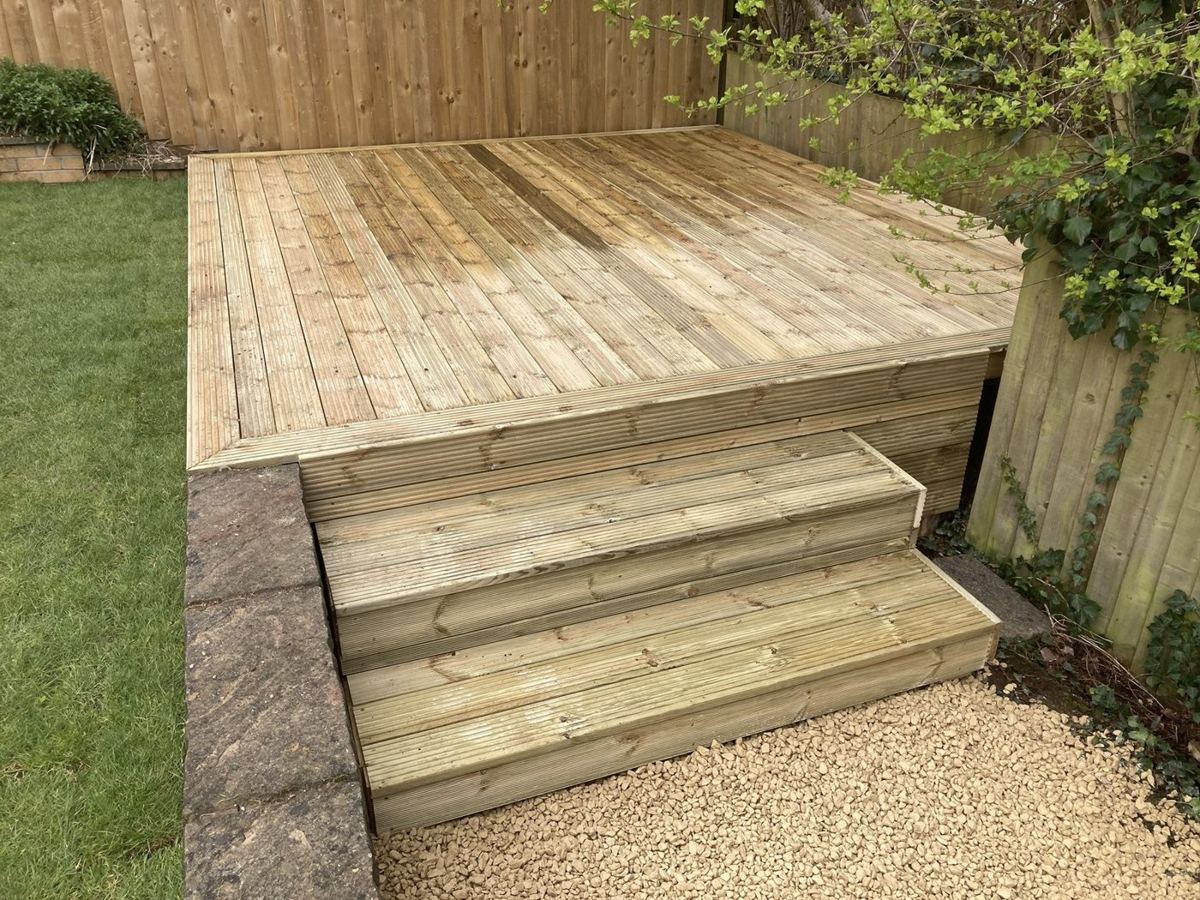
For most gardens, slow-grown European Redwood. It's pressure treated, high quality and well priced, and it's what the vast majority of my decks are built from. The slow growth gives a denser, more stable board than fast-grown timber.
Hardwood
Hardwood is the premium choice and not every budget suits it. I've fitted several types. Many hardwoods are naturally resistant to insects and rot. Yellow Balau is the most common because it strikes a good balance between price and lifespan. Its natural oils and resins resist rot, insects, and the algae and mould that make decking slippery, so it stays cleaner and grippier for longer. Other hardwoods such as Ipe and Cumaru can be sourced on request.
Hardwood still needs treating if you want to keep its colour. A south-facing deck with no shade will go silver without it.
Siberian larch
Siberian larch sits in the sweet spot on price, between Redwood and hardwood. It's naturally high in resin, which gives it better rot resistance than most softwoods, and it weathers to a silver-grey or can be oiled to keep its golden tone.
What Does FSC-Certified Mean?
All my timber comes from FSC-certified merchants. FSC (the Forest Stewardship Council) is an independent scheme that certifies timber comes from responsibly managed forests, where trees are replanted and wildlife and local communities are protected.
The certificate follows the timber through the supply chain, so you know where your deck came from.
How Long Does A Timber Deck Last?
A well-built Redwood deck, oiled once a year, will last 15–20 years. Hardwood lasts longer. What shortens a deck's life is almost always the build (undersized joists, poor support, rusting fixings) or no maintenance, not the timber itself.
Timber Or Composite Decking?
Timber costs much less up front (premium composite can cost four times as much or more, and some is very expensive) and looks and feels natural, but it needs oiling once a year. Composite needs almost no maintenance.
If you want the best value and don't mind a yearly oil, go timber. If you want to fit it and forget it, read my composite decking guide.
Why Do Decks Go Bouncy?
A bouncy or sagging deck comes down to the frame: joists that are too small, spaced too far apart, or not enough posts holding them up.
My standard:
- Joists: 5x2 (47x125mm) at 400mm centres.
- Posts: plenty of 4" posts supporting the frame. How many depends on the joist depth.
- Fixings: heavy-duty structural timber screws (TimberLOK-style) throughout the frame. They replace coach bolts, which are slow to fit, and almost every joint I make is a 90° butt joint, which these screws suit perfectly.
The result is a deck that doesn't bounce or flex.
Swipe to see the whole diagram →
A three-level deck going up
 Frames in, on posts
 Boards across the joists
 Finished, with rope balustrade
Can You Put Decking Over A Patio?
Yes. An old patio actually makes a great base for a deck. One of the best things about decking is that it can go over an old patio, or an obstacle that would be difficult to remove, as long as the deck is properly supported. You don't have to spend time and money pulling up a knackered patio. I can build on top of it.
Where a deck goes over soil, weed membrane goes down wherever it's needed, held in place with gravel or pins depending on the site.
Which Way Up Do Decking Boards Go?
I lay boards grooved side up. The grooves help water run off and give a bit more grip, as long as the deck is kept clean.
You'll hear people say grooves should face down for airflow. There's some logic to it, but on a well-built deck with good ventilation underneath it makes little difference.
I also lay the boards across the way you'll walk. When you step out of the door onto the deck, you cross the grooves rather than walking along them. That gives good grip and a bit more safety.
How Do You Stop Decking Being Slippery?
Keep it clean and oiled. Slippery decking is caused by algae and grime building up, mostly in shady, damp spots. A yearly pressure wash and oil keeps it under control.
If grip is a big concern, for example with a shaded deck or older family members, a hardwood like Yellow Balau naturally resists the algae that makes decking slippery.
How Do You Look After A Timber Deck?
Pressure wash and oil it once a year, at the start or end of summer:
- Pressure wash it. Around 110 bar is safe. 220 bar can damage the wood. Keep the nozzle moving and not too close.
- Let it dry fully.
- Oil it. Any branded decking oil from a DIY store is fine. They're very good quality these days.
The common mistakes are not cleaning it well enough first and oiling it while it's still wet. Honestly, I don't see many mistakes here. It's easy to get right.
Do You Need Planning Permission For Decking?
Usually not. In England, decking is normally permitted development if:
- it's no more than 30cm above the ground
- together with any extensions and outbuildings, it covers no more than half the garden
- none of it is in front of the house (the principal elevation).
You will need permission for a listed building, a flat or maisonette, or where your council has removed these rights. There are tighter rules in conservation areas, National Parks and Areas of Outstanding Natural Beauty. If your deck will be raised, check with Bristol City Council or South Gloucestershire Council before work starts. I'll flag it on the quote visit.
Source: Planning Portal: Decking
What I Build
- Ground-level decks for seating areas and BBQ spaces
- Raised decks with a properly built frame
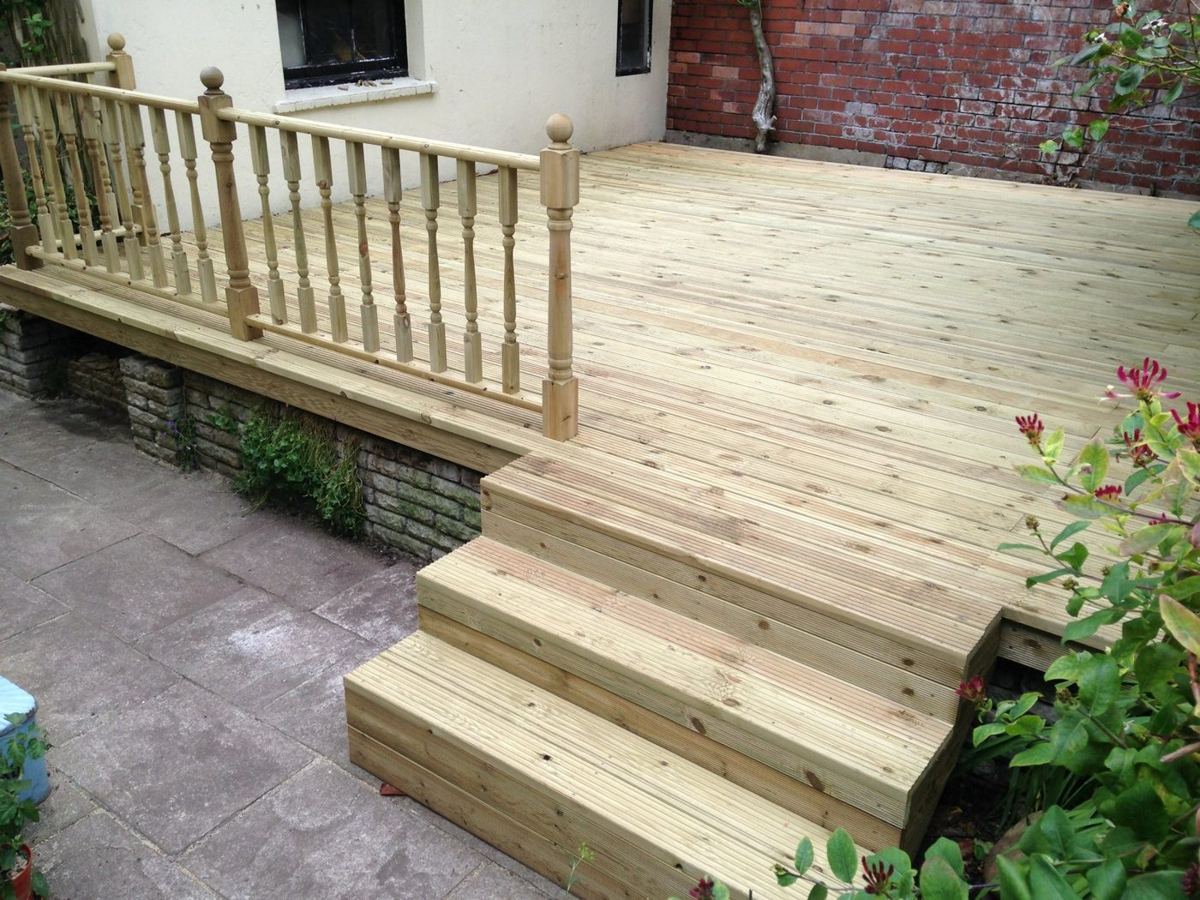
- Balustrades to match the deck
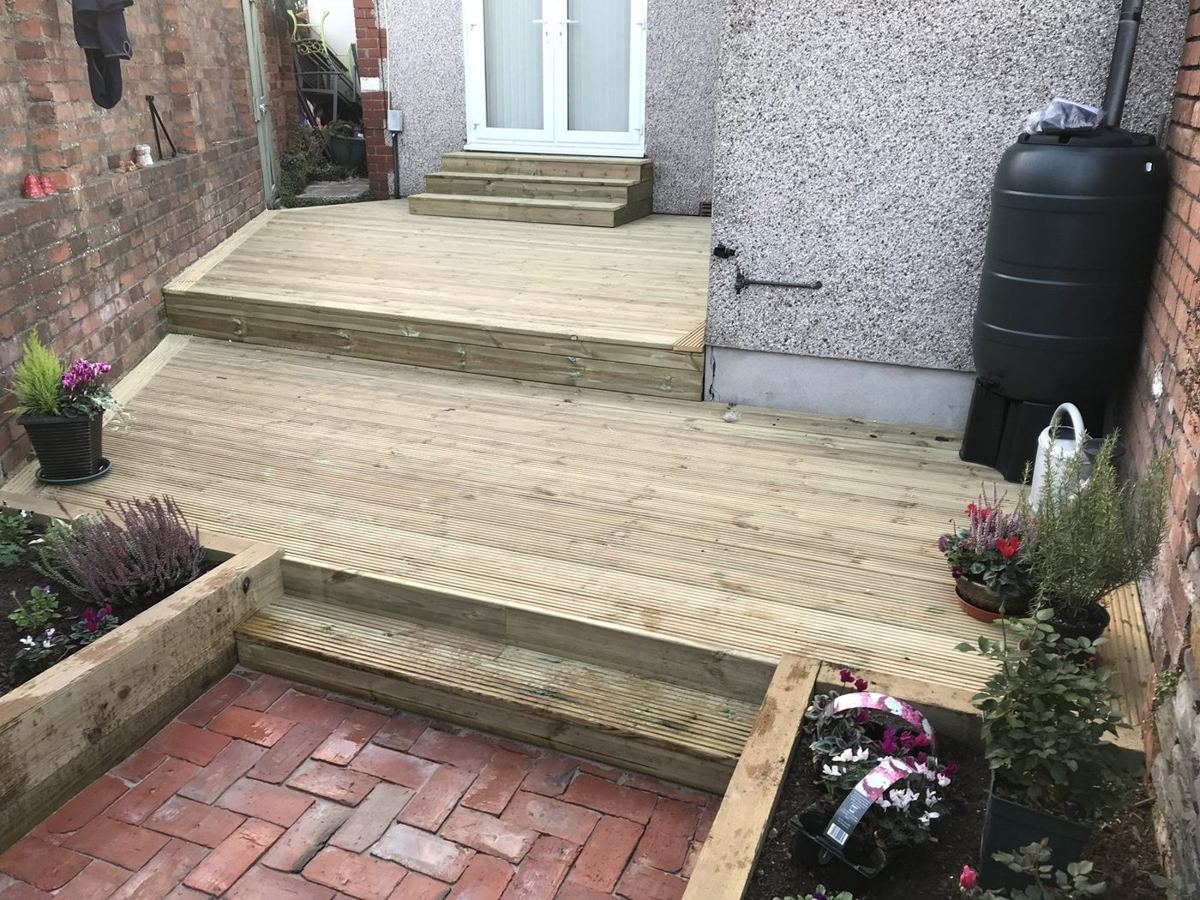
- Steps built as part of the structure
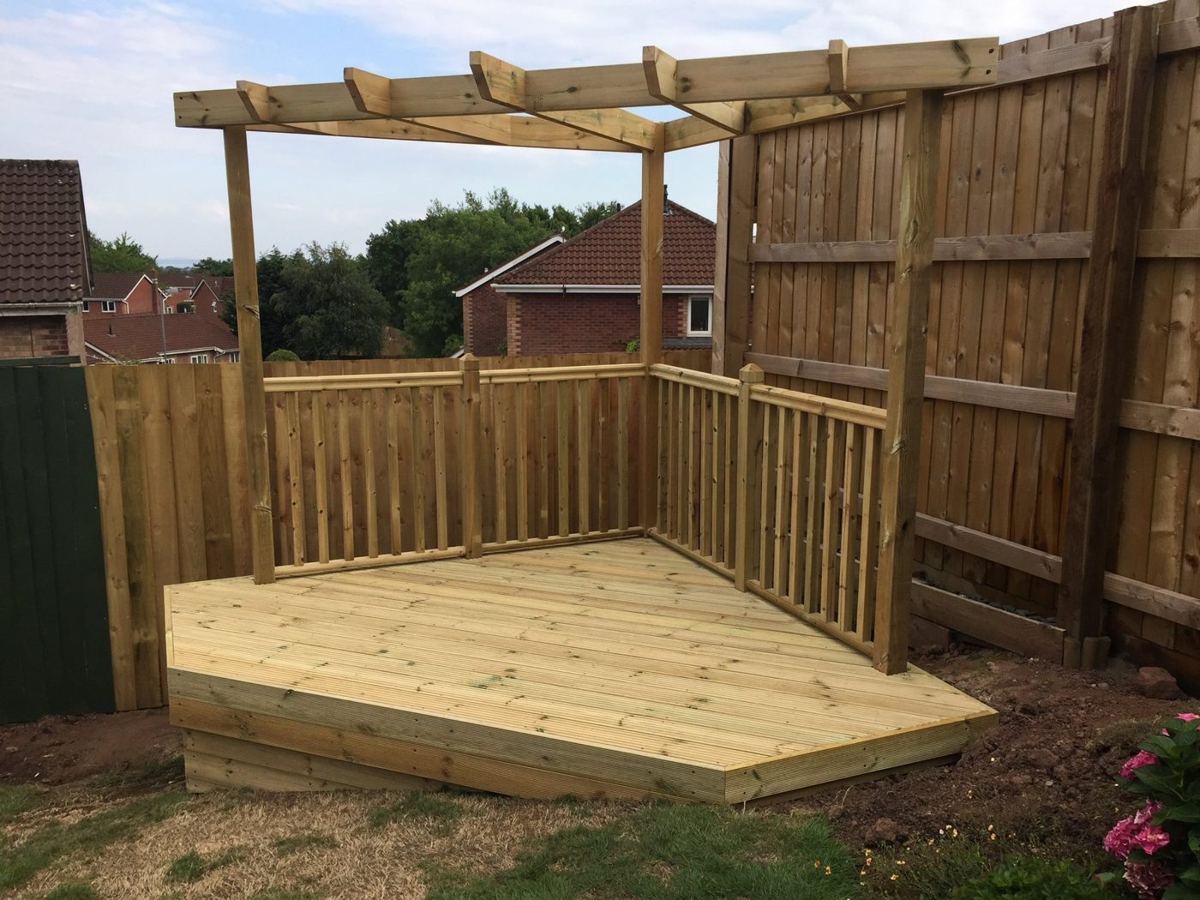
- Pergolas designed into the deck from the start
- Edging and framing, the finishing details
How long does it take to build a deck?
It depends on the size, access, ground conditions, height, and extras like steps, balustrades or a pergola. I'll give you a realistic timescale with the quote.
Timber Decking FAQ
Straight answers. If yours isn't here, WhatsApp me.
Thinking About
A New Deck?
WhatsApp or call and I'll come and look at it. 12-month workmanship guarantee. Public liability insured.